CARING FOR
DOVE & PIGEONS
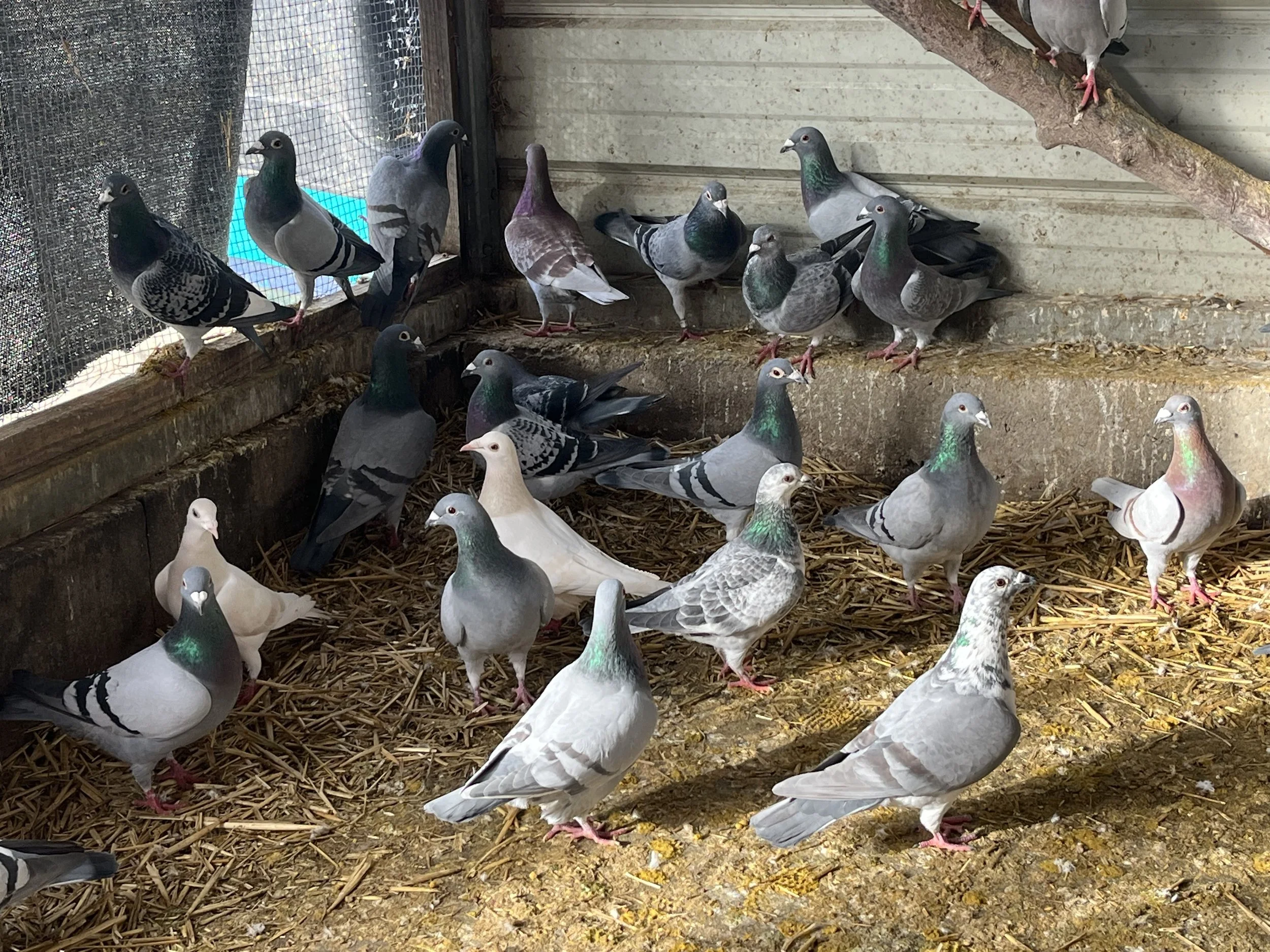
Doves and pigeons are gentle, intelligent birds that can make affectionate and rewarding companions. Whether you’re drawn to their soft cooing, graceful flight, or social nature, caring for these birds requires understanding their unique needs for space, nutrition, and mental stimulation. From choosing the right enclosure to providing proper diet and enrichment, learning the basics of dove and pigeon care ensures your feathered friend thrives while deepening the bond you share.
Size
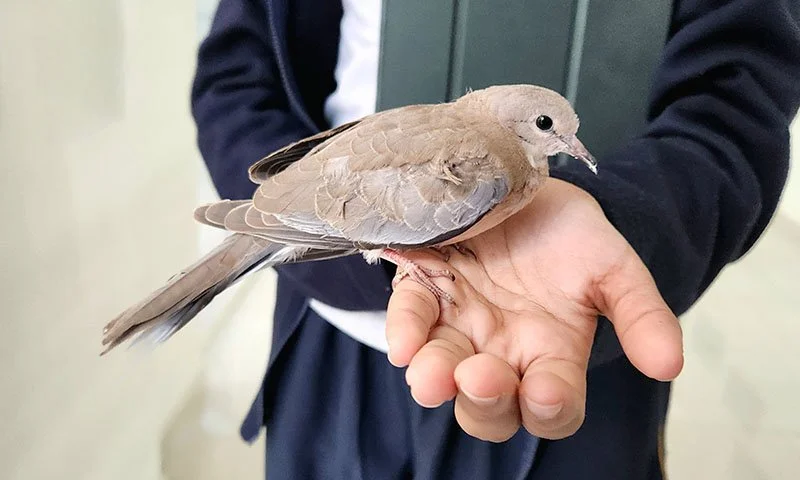
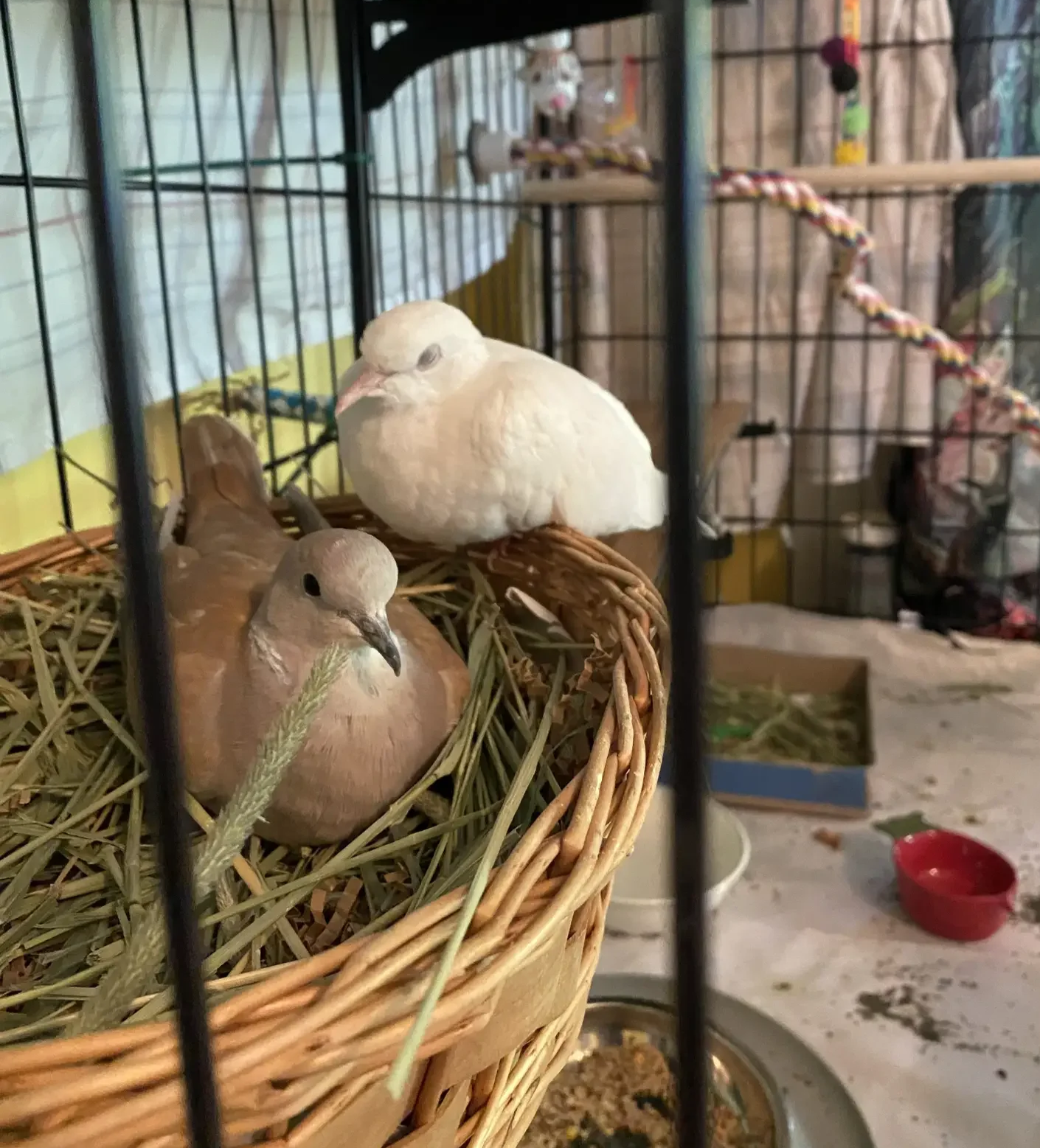
Most domestic pigeons and doves are 10–15 inches long (beak to tail) and weigh 8–16 ounces (225–450 g).
Lifespan
Typically 10–15 years, though some can live up to 20 years with proper care, diet, and a safe environment.
Behavior
Social, affectionate, and curious. Enjoy company, exploration, and gentle interaction. Rarely bite or cause destruction.
Care Needs
Require safe housing, proper diet, enrichment, and regular health monitoring. Indoor pigeons benefit from supervised flight time, and all thrive with mental and physical stimulation.
indoor enclosure
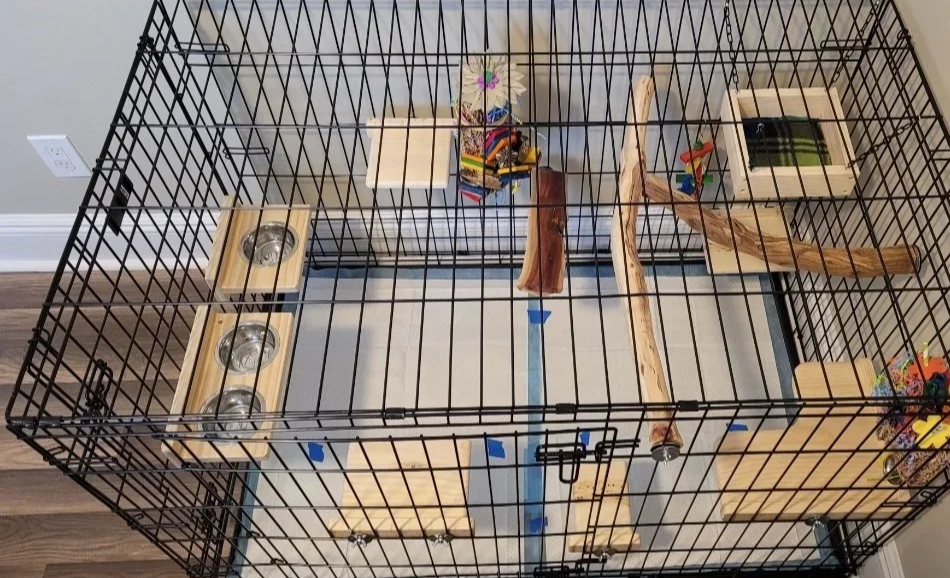
Indoor housing is essential for pigeons—cages should never be used outside, as they simply aren’t safe in an outdoor environment. Bigger is always better when it comes to cage size, and for pigeons, length and width matter more than height since they don’t climb like parrots.
Size & Structure
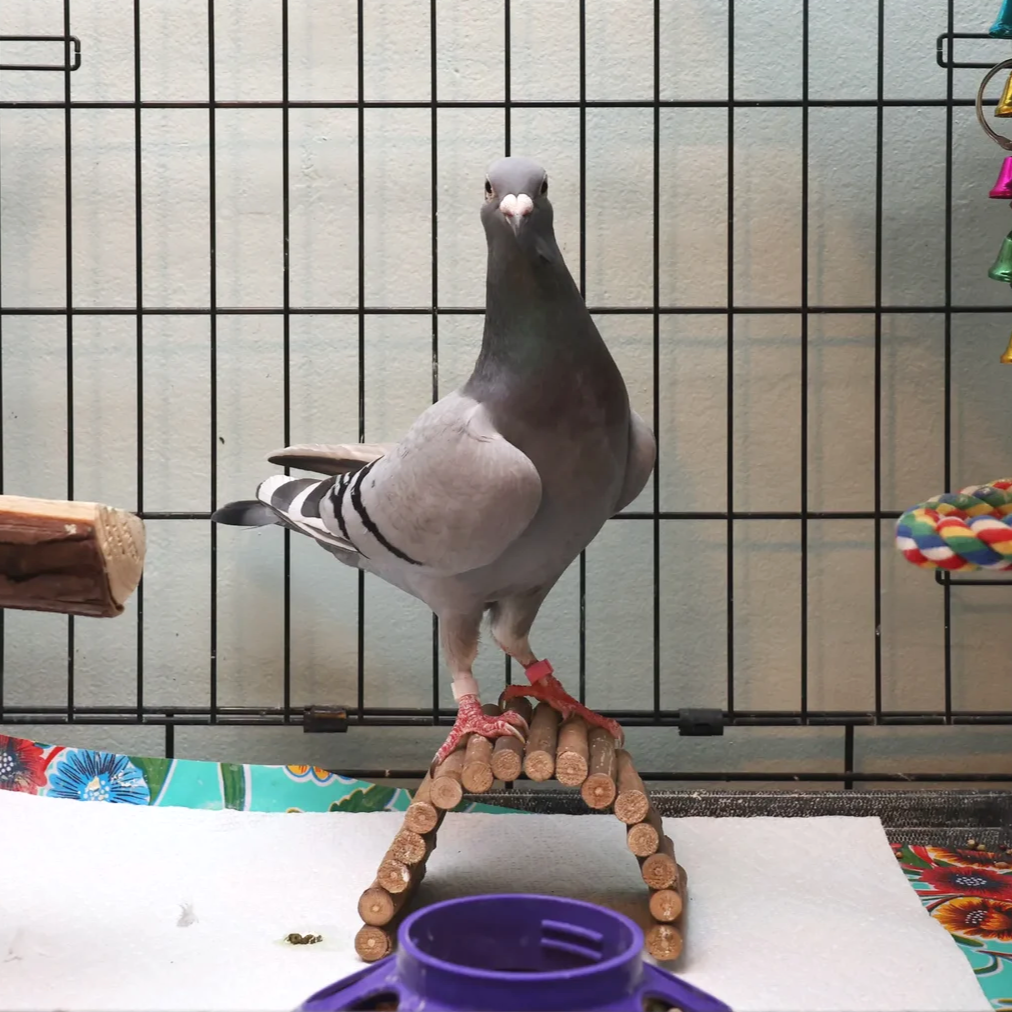
For one or two compatible pigeons, we recommend a cage at least 42” wide × 27” deep × 30” high. Only mated pairs should share a cage. A large dog crate, can be adapted into a comfortable indoor enclosure.
Bar Spacing
If your home doesn’t have cats or dogs that could reach inside, wide spacing like a large dog crate is fine. If pets could reach the birds, use narrow bars (no more than 0.5” apart) to keep your pigeons safe.
Flooring
The cage bottom should be flat and easy to clean, such as vinyl or paper liners cut to size. Pigeons should never have to stand on a wire floor—it’s uncomfortable and unhealthy for their feet.
Perches & Shelves
Pigeons enjoy more than just perches. Include shelves or platforms to allow hopping, strutting, lounging, napping, or courting.
Enrichment
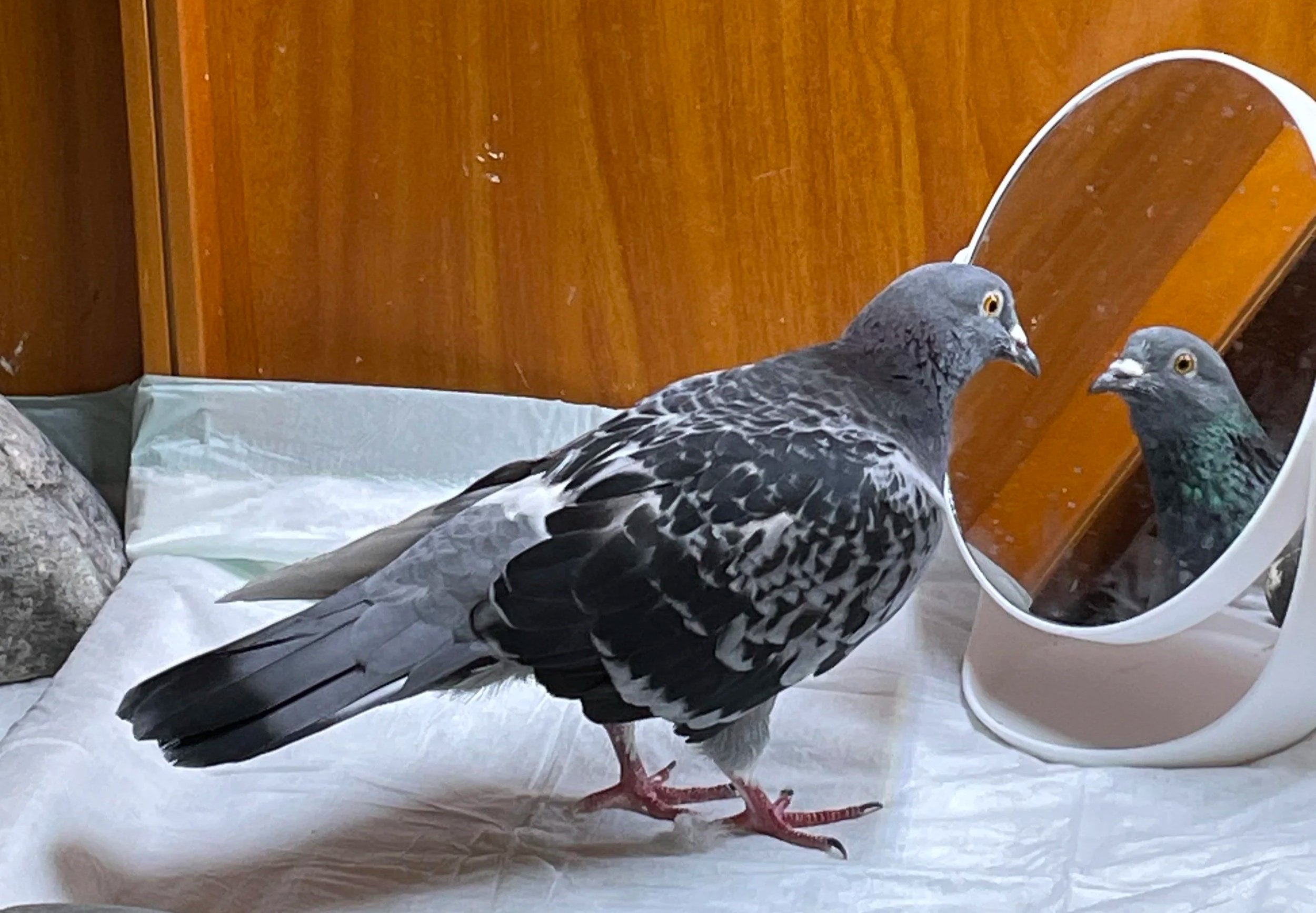
Add a large mirror, which pigeons love—they’re highly visual and can recognize themselves.
Nesting
Include a nesting basket or box, weighted to prevent tipping.
Feeding
Use heavy, flat-bottomed ceramic dishes for food and water (thrift stores often have great options).
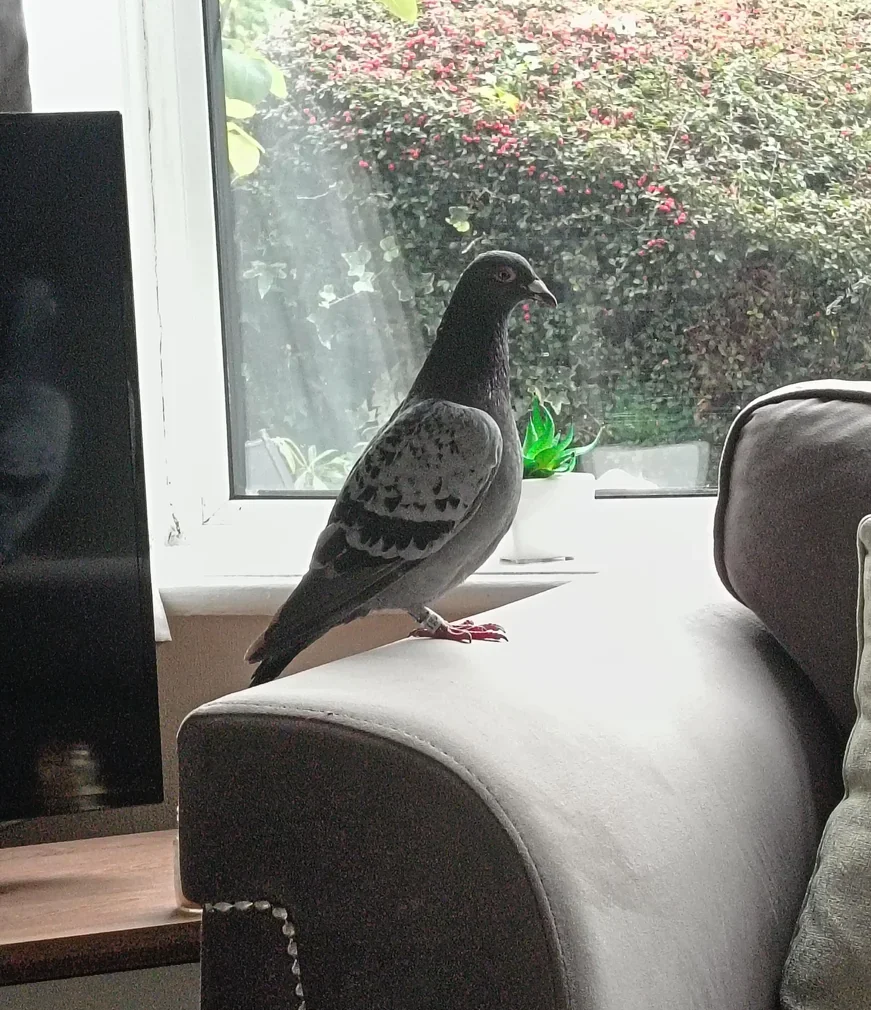
Free Flight Time for Indoor Pigeons
Indoor pigeons benefit greatly from regular, supervised free flight time outside their cage. Flying helps them exercise, maintain strong muscles, and engage in natural behaviors that a cage alone can’t provide. After all, you wouldn’t want to live your entire life in your bedroom or bathroom—neither does your pigeon!
Supervision is key
Always allow free flight in a safe, bird-proofed room where windows and doors are closed and hazards are removed.
Start small
Begin with short flight sessions and gradually increase time as your pigeon gains confidence and stamina.
Routine matters
Aim for daily or several-times-per-week flight sessions to support physical and mental health.
Enrichment during flight
Let pigeons explore perches, shelves, or toys during free flight to encourage natural curiosity and activity.
Free flight is not just exercise—it’s an important part of your pigeon’s well-being, confidence, and happiness.
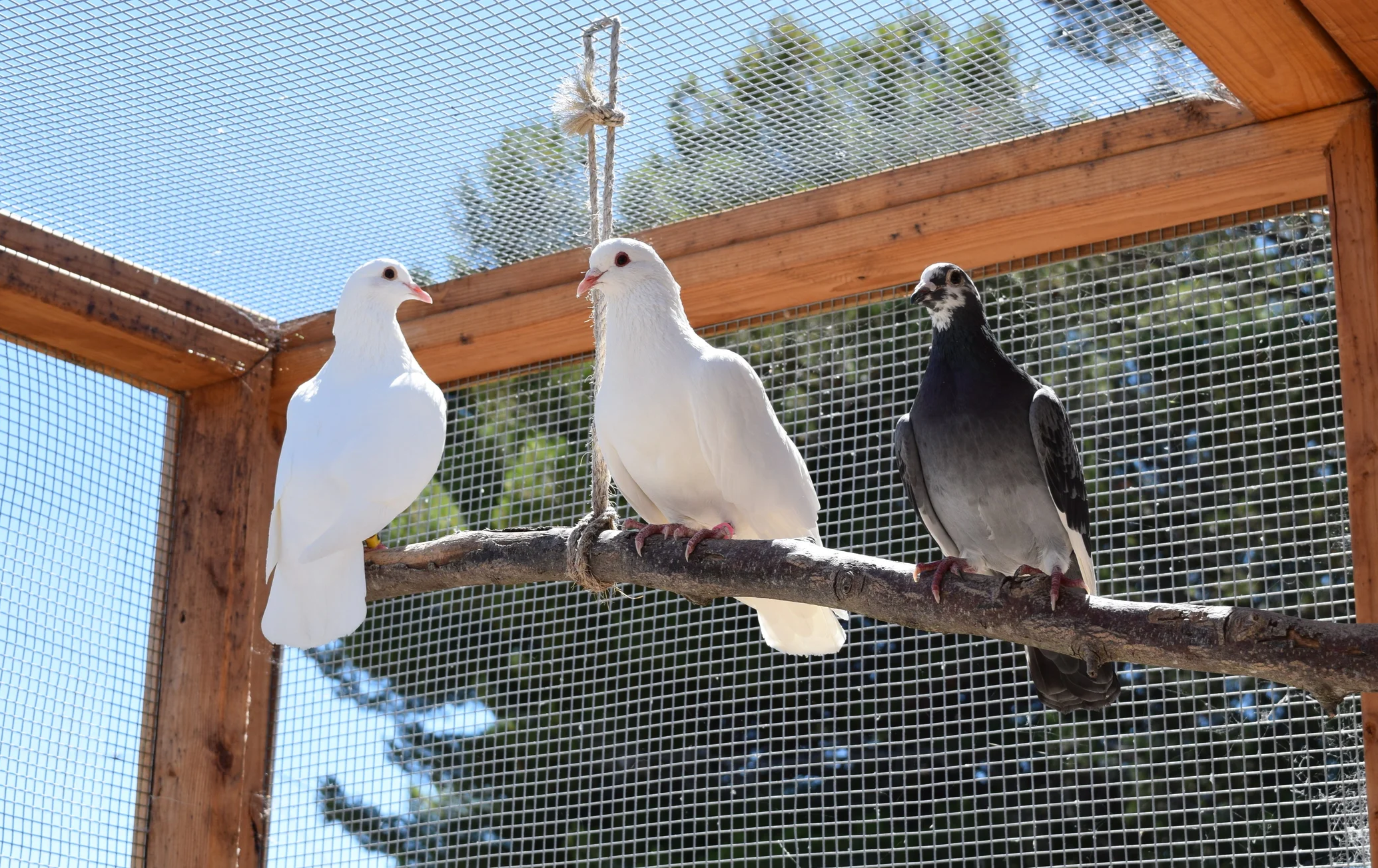
outdoor enclosures
Rescued and captive-bred pigeons are not equipped to survive outside on their own, so a safe, predator-proof outdoor aviary is essential.
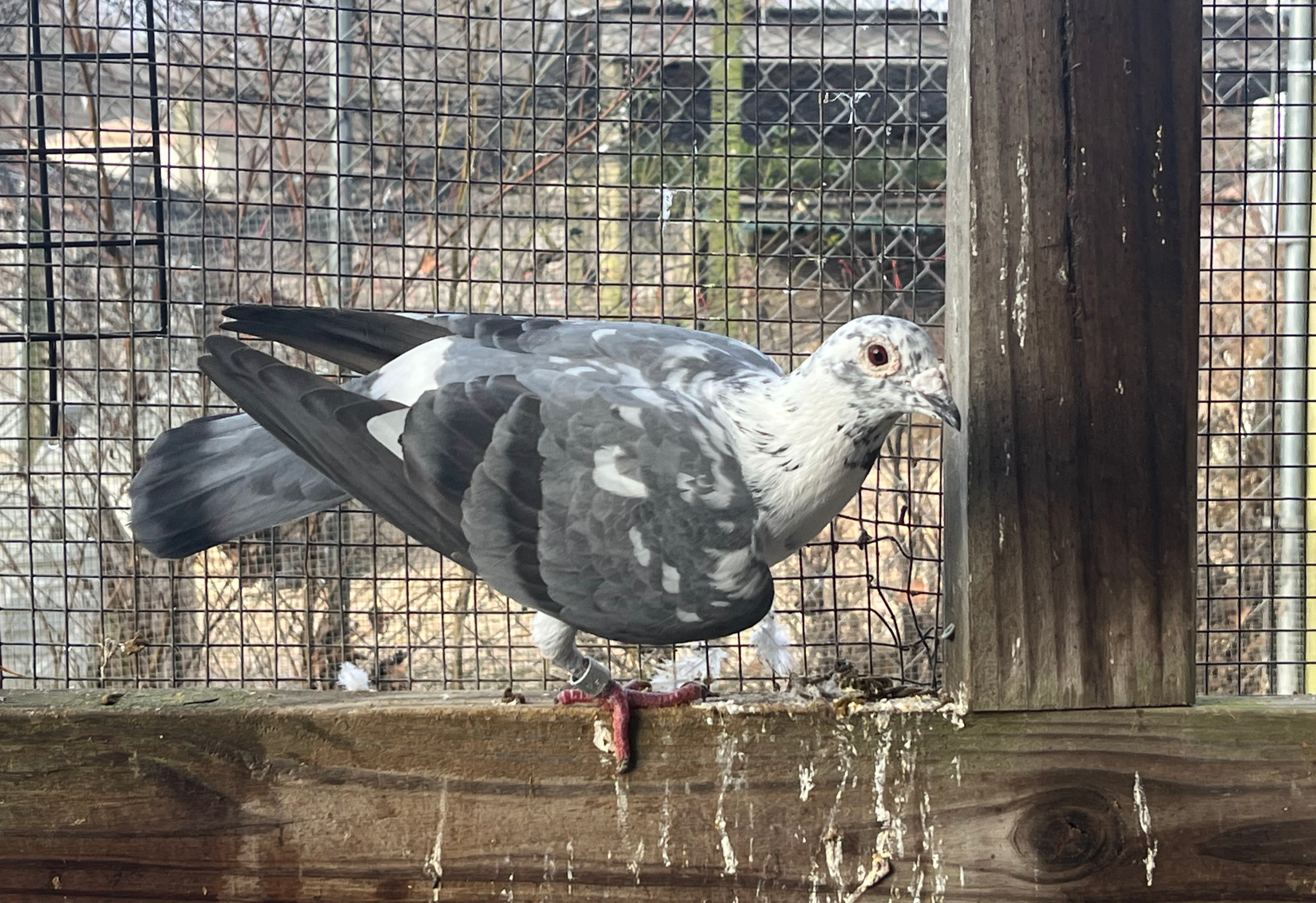
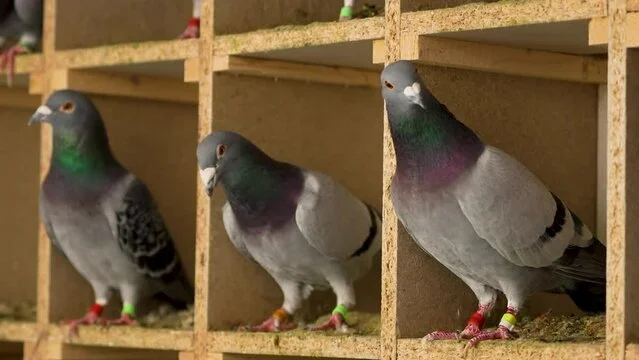
Size & Structure
Minimum dimensions: 4’ wide × 6’ long × 6’ high (larger is always better). Use predator- and rodent-proof materials with hardware or mesh openings no larger than 0.5 inches.
Shelter & Protection
Outdoor aviaries should include a covered or enclosed indoor area where pigeons can retreat from sun, wind, rain, and extreme temperatures. This sheltered space also provides a safe, quiet area for nesting, roosting, and resting.
Companionship
Outdoor aviaries should house compatible pairs or small groups; single birds should not be isolated outdoors. Pigeons are social and should never be kept alone.
Enrichment
Provide a large mirror, which pigeons enjoy and can self-recognize.
Nesting
Include nest boxes (one per mated pair) with nesting materials, such as pine needles.
Bathing
Offer a large, shallow dish or pan for bathing, as pigeons are meticulous about keeping their feathers clean.
Feeding & Hydration
Supply fresh food and water daily using flat-bottomed, heavy dishes or crocks to prevent tipping.
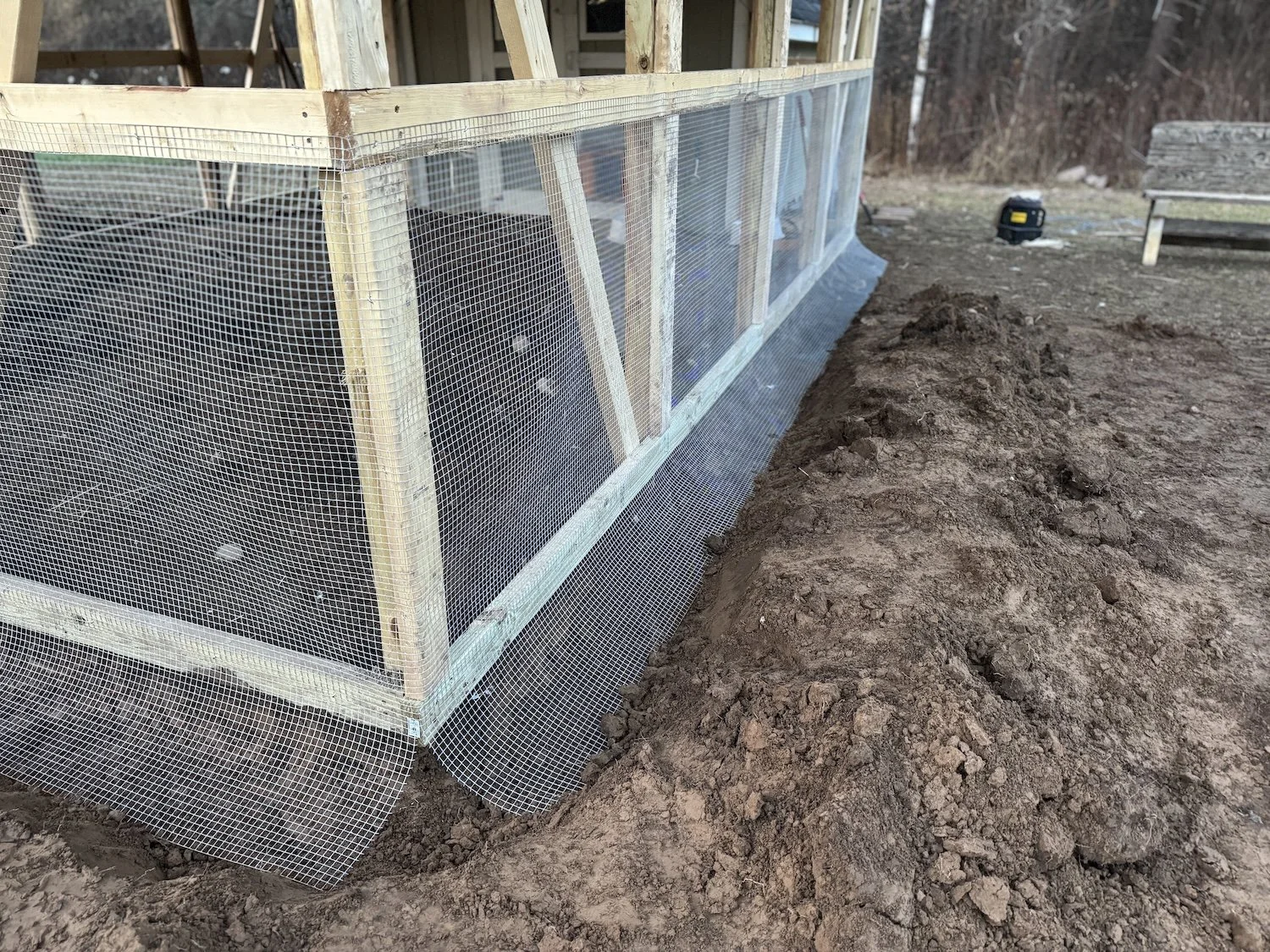
PREDATOR PROOFING AN OUTDOOR AVIARY
Frame & Structure
Build the frame tight and sturdy using 2x4s or similar lumber, secured with screws and bolts. If the structure wobbles or can be easily moved, it isn’t safe, no matter what predators live in your area. The enclosure should be as large as possible, providing both room to fly and space for enrichment.
Hardware Cloth & Walls
Encapsulate all sides of the aviary—the four walls, floor, and roof—in 0.5” or 0.25” hardware cloth. Each panel should overlap securely, with all seams tight and no gaps larger than 0.5 inches. (If you can fit your fingertip through, it’s not safe.)
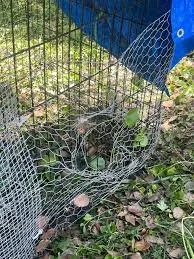
Never use chicken wire or bird netting—these keep birds in but won’t keep predators out, becoming a trap.
If building on a solid base like cement and not lining the floor with hardware cloth, bolt the frame down tightly to prevent rodents or other small animals from getting in.
Plywood, siding, or roofing can be added over the hardware cloth for weather protection—but never replace the hardware cloth itself. Rodents will chew through anything that isn’t protected by it.
Shelter & Layout
Design the aviary so half is sheltered with a roof and siding for protection from sun, wind, and rain, and half is open to allow light and fresh air.
Place the aviary in a sunny spot, and orient it so you can enjoy watching your birds. Shade can always be added if needed.
Doors & Access
Secure doors with two predator-proof latches, one high and one low, and ensure gaps around the door are too small to fit a fingertip.
Maintaining a Safe Aviary
Even the sturdiest aviary can develop weak spots over time. Inspect your enclosure regularly to ensure:
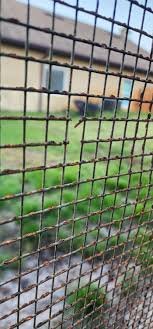
All panels of hardware cloth remain secure, with no gaps larger than 0.5 inches.
Screws, bolts, and fasteners are tight and haven’t loosened.
Doors and latches are functioning properly and gaps are minimal.
Shelters, perches, and platforms are stable and safe for birds to use.
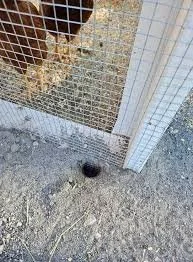
There are no signs of chewing or damage from rodents, raccoons, or other animals.
A quick weekly check and a more thorough monthly inspection can prevent escapes, injuries, or predator access—and keeps your pigeons happy and safe.
DIETARY NEEDS
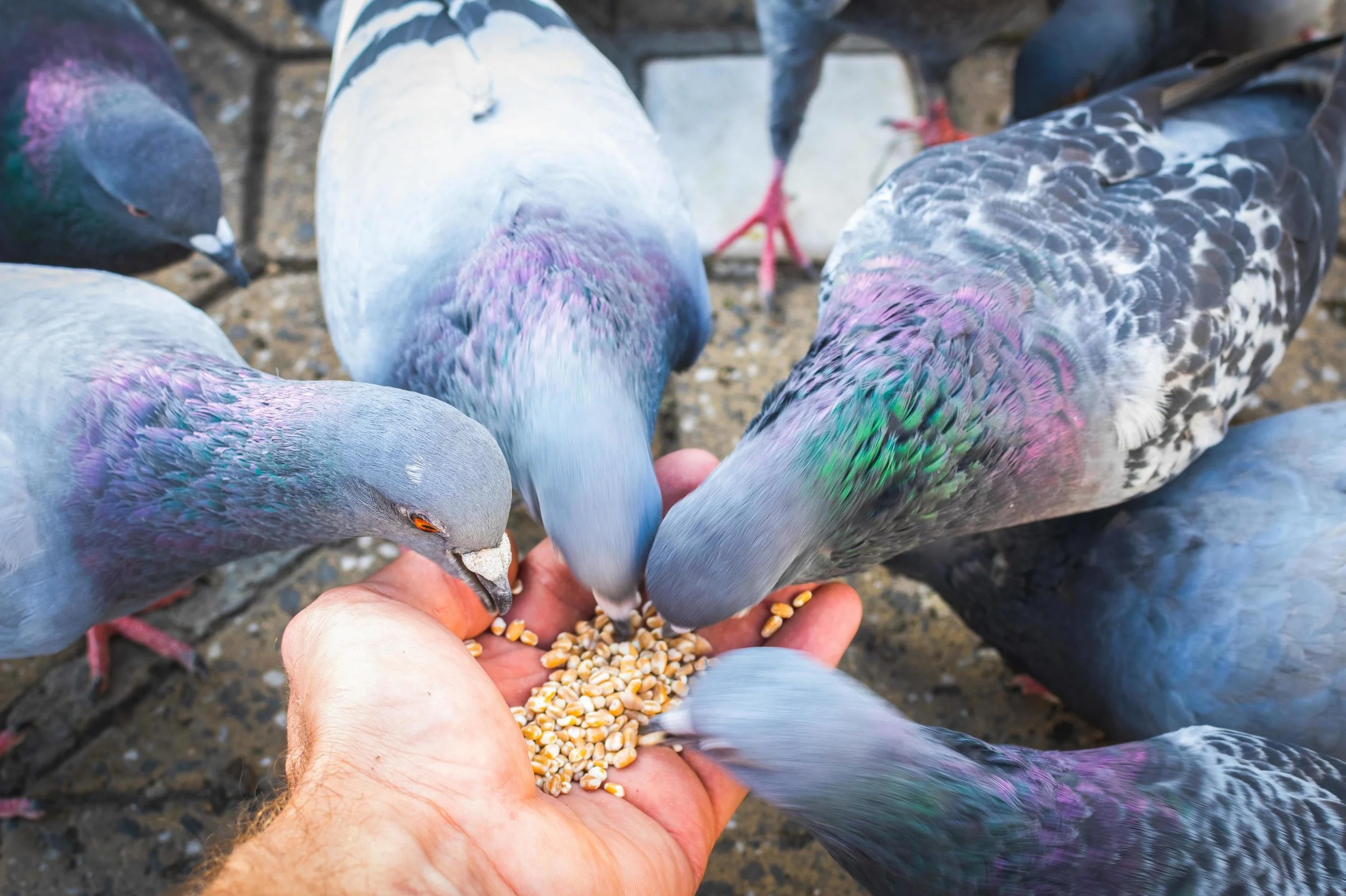
Pigeons and doves eat primarily seeds and grains, and you can purchase pre-mixed pigeon or dove feed at feed stores or online. A quality blend that includes safflower seeds and even some popcorn provides both variety and enrichment.
Meal Feeding:
Pigeons and doves do best when meal-fed. Offer an appropriately sized portion of fresh food in the morning, with the goal that it is fully eaten by sunset. Any leftover food indicates overfeeding—birds may gorge on their favorite high-fat seeds (like safflower) instead of getting balanced nutrition. Proper portioning also reduces seed scattering and makes cleanup easier. Offer fresh food again the next morning.
Portion Guidelines
Start with about 2 tablespoons per bird and adjust as needed until the morning portion is completely consumed by evening. Feed only as much as your birds can finish in 24 hours.
Vegetables & Greens
Offer fresh veggies or greens 3–4 times per week. Chop or mince bird-safe options such as:
Carrots, broccoli, snap peas
Kale, dandelion greens, spinach (small amounts)
Cauliflower, lettuce
Bell peppers, edamame
Water
Provide plenty of clean, fresh water at all times, refreshed daily in a clean dish.
Minerals & Calcium
Pigeons and doves do not need grit to digest food. The only benefit of grit or crushed oyster shell is as a source of minerals and calcium, which are essential for long-term health. These nutrients are best provided through a high-quality avian vitamin and mineral supplement (e.g., Nekton-S, Lafeber’s) rather than relying on grit alone.
ENRICHMENT
Safe & Beneficial Toy Types
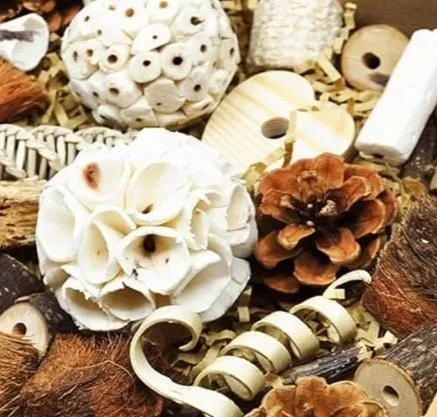
Natural materials
Toys made from untreated, non-toxic woods (such as pine, balsa, poplar), cardboard, paper, and natural fibers like sisal, cotton, or hemp are generally safe and engaging. These materials let doves peck, shred, and explore without harmful chemicals.
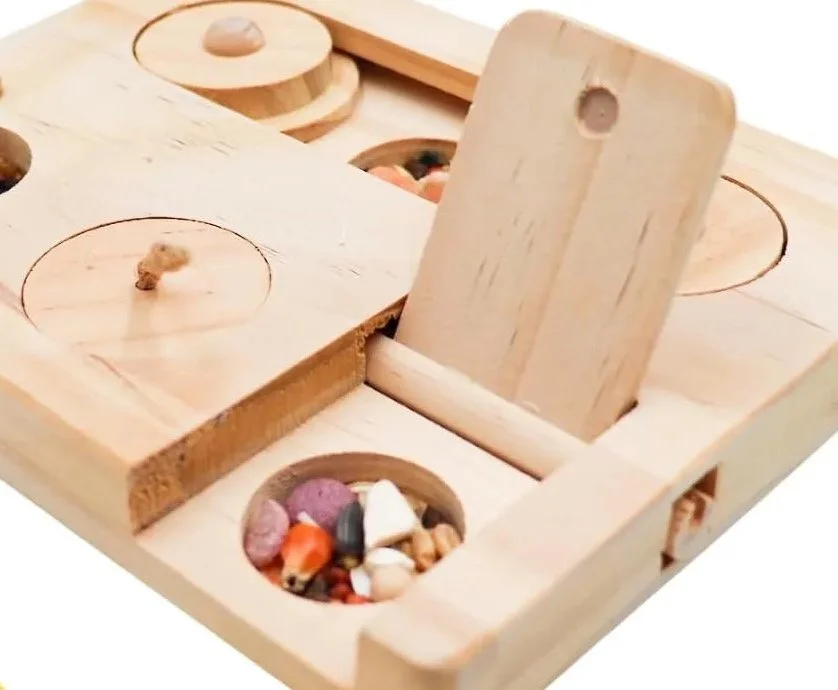
Foraging toys
These mimic natural food-seeking behavior and encourage mental stimulation and physical activity. Examples include cardboard tubes with hidden treats, hay balls, or shredded paper piles.
Chewable blocks and shapes
Small, untreated wood blocks or bird-safe acrylic pieces that are sized for your bird can offer healthy beak exercise and novelty.
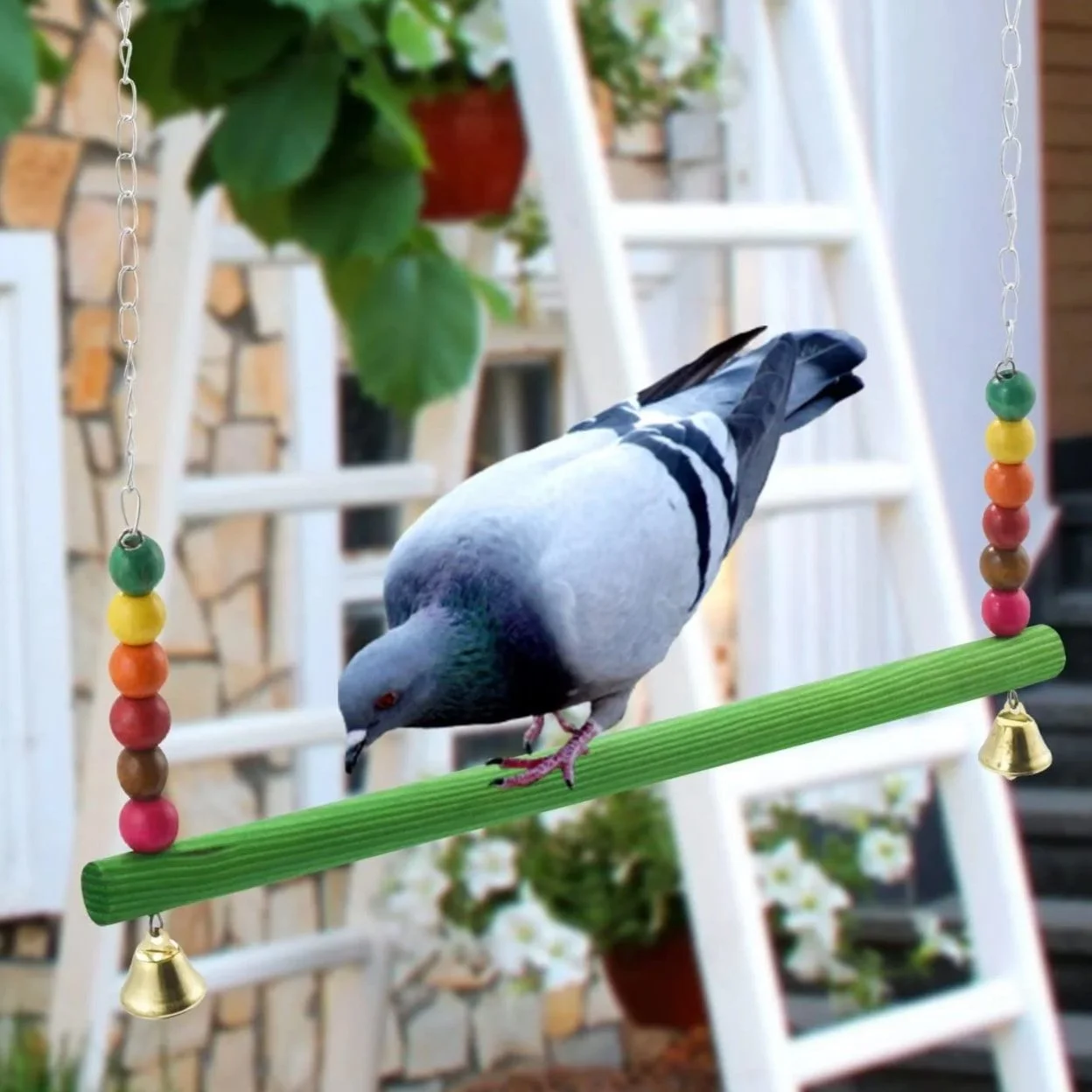
Swings, ladders, and platform toys
These help support movement and play, giving birds physical enrichment beyond perches.
Foot toys and manipulatives
Simple items that birds can push, pull, examine, and manipulate with their feet and beaks — as long as parts are large and secure — help prevent boredom and encourage natural curiosity.
Materials & Toys to AVOID
Heavy metals and toxic materials
Avoid toys with lead, zinc (such as galvanized or plated metal parts), copper, or unknown metal alloys — these can be toxic if chewed or ingested.
Treated or painted wood
Woods that have been pressure-treated, varnished, or painted with unknown dyes can contain harmful chemicals that birds may ingest when chewing.
Soft or unknown plastics
Cheap plastics, especially those that can be chewed into sharp fragments or leach chemicals, should be avoided. Birds love to chew, and plastic shards can cause internal injury if swallowed.
Small parts & loose bits
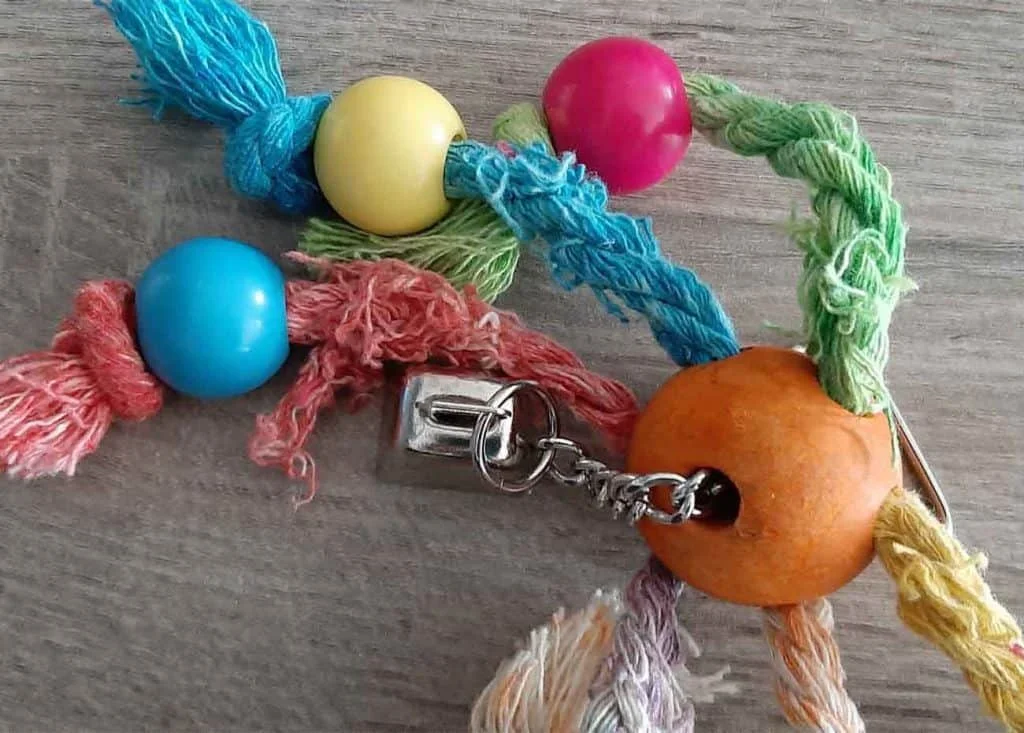
Toys with beads, buttons, jingle bells, bells with removable clappers, loose screws, or small dangling parts pose choking hazards, can be swallowed or beaks can become stuck.
Long strands & loops
Loose strings, thin rope, or long cords can wrap around a bird’s feet, neck, or wings, causing entanglement or strangulation.
Ropes/fraying fibers: Even natural fiber ropes need to be monitored — if they fray and birds swallow strands, that can lead to crop or intestinal impaction.
health & preventative care
Providing your birds with a balanced diet, adequate sunlight, and sufficient space for exercise is the foundation of good health. On top of these basics, regular preventive care, parasite control, and monitoring for signs of illness are essential to keeping your pigeons and doves happy and thriving.
Monitoring for Signs of Illness
Watch for subtle changes in your birds’ behavior or appearance. Contact a veterinarian if you notice:
Sudden changes in activity level or behavior
Not eating or reduced appetite
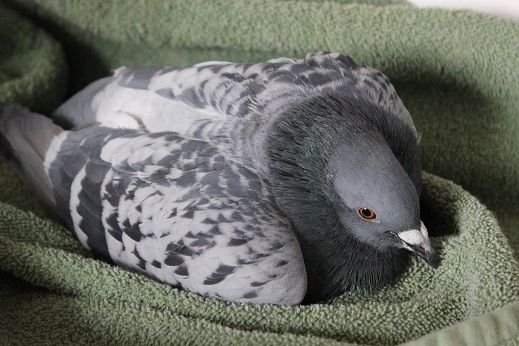
Fluffed-up feathers, sitting on the floor instead of perching or flying
Hunched posture
Persistent changes in the color or consistency of droppings
Weight Checks
Regular weight checks using a gram scale can also help detect early illness before visible symptoms appear.
Preventing Canker (Trichomoniasis)
Pigeons and doves are prone to developing canker, a disease caused by trichomonads, which normally live in the digestive tract. Minor stresses such as molting or egg-laying can allow these organisms to multiply and cause disease.
Preventive treatment is recommended at least twice per year, even if no symptoms are visible. Birds with weakened immune systems or a history of severe canker may need more frequent care.
Common treatments include Metronidazole, Ronidazole, Spartrix (Carnidazole), Seconidazole, and Dimetridazole (Emtryl). Combination products like Ronsec are especially effective for resistant strains.
Keep two different canker treatments on hand and rotate their use to prevent resistance.
When possible, treat birds individually using a dose calculated by weight. Water-soluble forms of these medications can be used for flock-wide treatment, but avoid this in extreme heat when birds may over-consume water.
Parasite Prevention
Outdoor birds or those exposed to other flocks should be treated regularly for internal and external parasites.
Moxidectin Plus treats common worms, mites, and biting flies; outdoor birds may require treatment three times per year. Indoor birds usually need only initial treatment unless they are exposed to new infection sources.
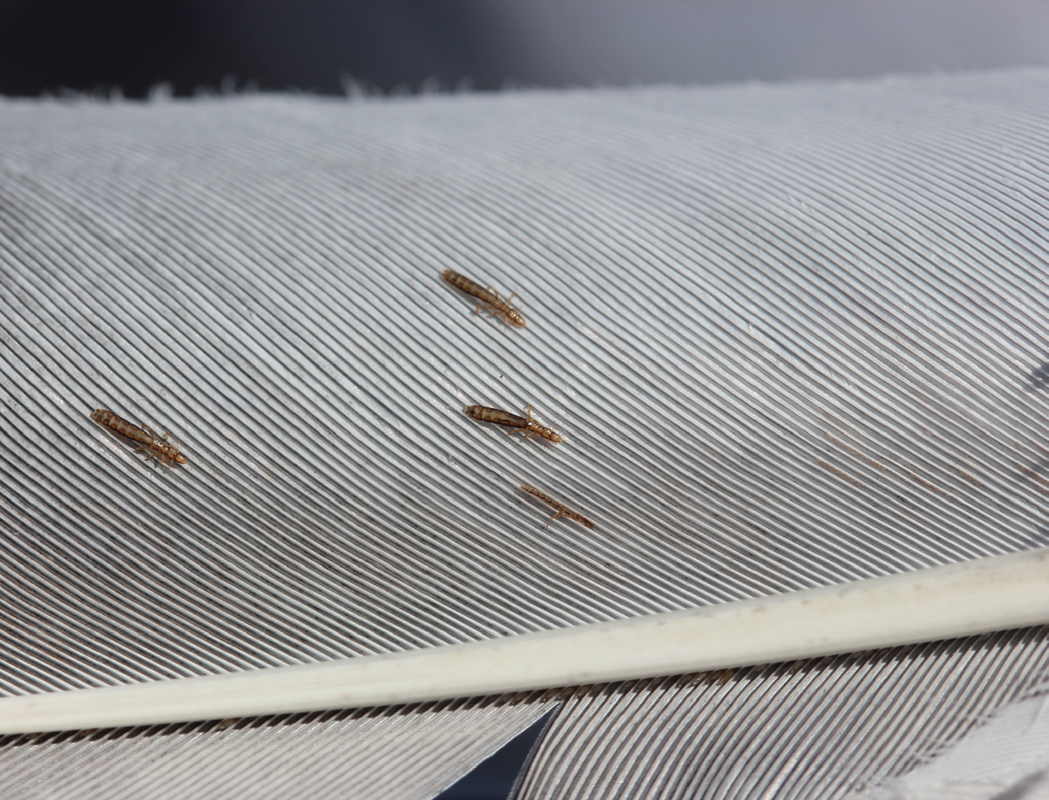
Feather lice are common even in indoor birds. While Moxidectin Plus does not target lice, monthly spraying with a safe mite/lice spray (e.g., Scalex) helps prevent infestations. Housing should also be sprayed during regular cage cleanings.
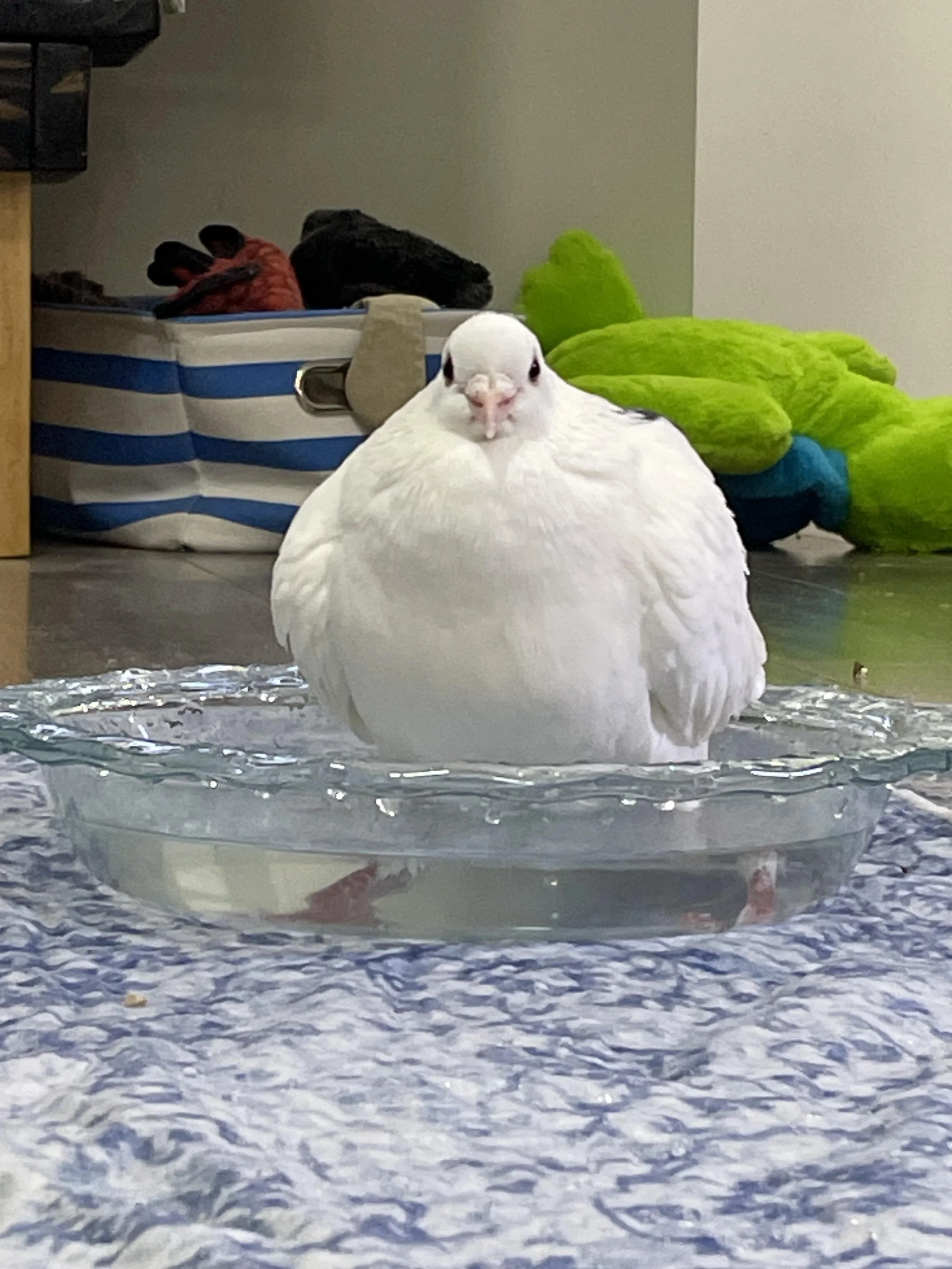
Regular baths, optionally with avian bath salts (such as Dr. Pigeon’s), help keep feathers clean, soft, and free of parasites.
Adjustment & Bonding
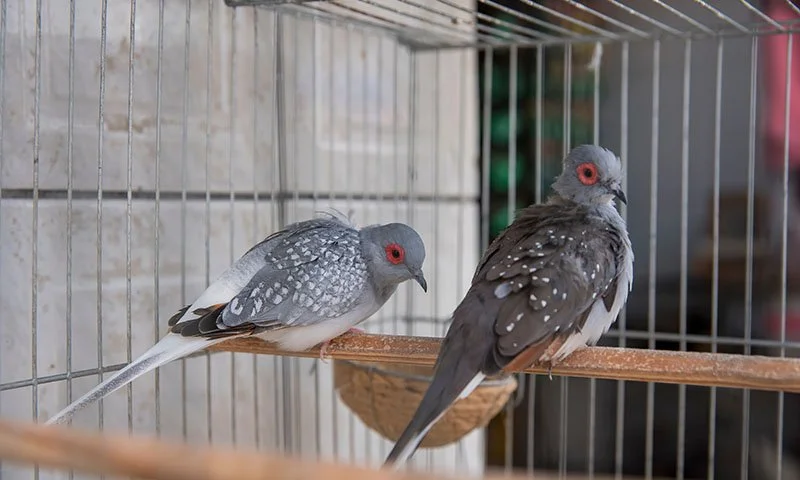
Bringing a new pigeon or dove into your home is exciting, but it’s important to let your bird adjust at its own pace. Pigeons and doves are gentle, social, and intelligent, but they can be cautious in new environments. A calm, predictable routine will help your bird feel safe and start to trust you.
Create a Safe Space
Set up your bird’s cage or aviary in a quiet area of the home, away from heavy foot traffic, loud noises, and sudden activity. Make sure food, fresh water, and a shallow bath are available right away, along with shelves, perches, and a secure nesting area. A calm, predictable environment helps reduce stress and allows your bird to feel safe.
Allow Time to Adjust
When welcoming a new pigeon or dove, it helps to think in terms of the 3-3-3 adjustment period: roughly 3 days to decompress, 3 weeks to begin settling into a routine, and 3 months to fully feel at home. During this time, move slowly, speak softly, and avoid rushing interaction. Each bird adjusts at its own pace, and patience during this period builds trust.
Observe & Learn Their Behavior
Spend time watching how your bird eats, rests, and moves around the enclosure. Notice preferred perches, posture, and reactions to your presence. These observations will help you understand when your bird feels relaxed, curious, or unsure, and allow you to respond thoughtfully.
Gentle Interaction
Sit quietly near the enclosure and allow your bird to approach you on its own terms. Offering treats by hand can help build positive associations, but never force contact. Trust develops most naturally when your bird feels safe and in control.
Encourage Bonding & Enrichment
Speak softly during daily care routines such as feeding and cleaning. Keeping a consistent schedule helps your bird feel secure and builds confidence in their environment. Over time, your pigeon or dove may begin to seek your presence or respond to your voice.
Watch for signs of trust
As bonding develops, you may notice relaxed body language, gentle cooing, and increased curiosity. Eventually, your bird may perch nearby, hop closer, or step onto your hand or arm. These small moments are meaningful signs that trust is growing.