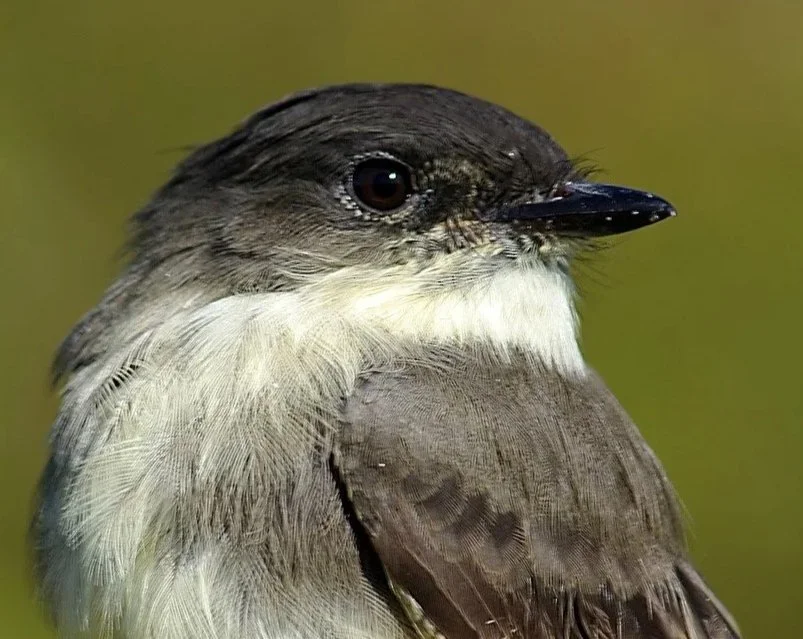
Flycatchers are alert, agile birds best known for their impressive aerial skills. With quick reflexes and sharp eyesight, they dart out from perches to snatch insects midair before returning to the very same branch. While many species wear subtle shades of gray, olive, or brown, their personalities — and hunting talents — are anything but plain.
Found across North and South America, flycatchers thrive in forests, fields, wetlands, and even suburban backyards.
SWIFT HUNTERS
COMMON FLYCATCHERS

ACADIAN FLYCATCHER
(Empidonax virescens)
A small, olive-green bird with a soft eye ring and sharp call. Native to the eastern United States during breeding season, it prefers mature deciduous forests near streams before migrating to Central and South America for winter.
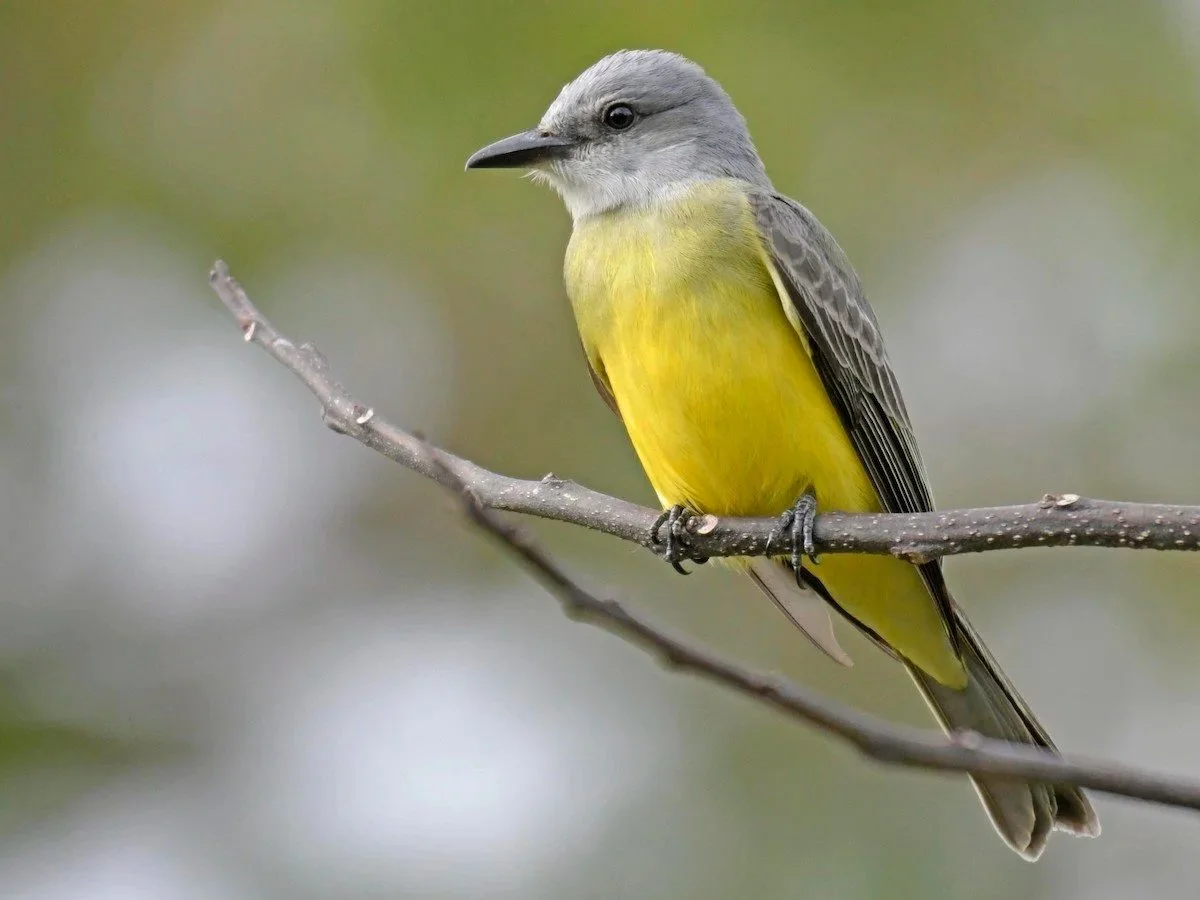
WESTERN KINGBIRD
(Tyrannus verticalis)
Sleek and confident, with gray upperparts and bright yellow belly. Found across the western U.S. in summer, it thrives in open country and suburban areas before migrating south for winter.
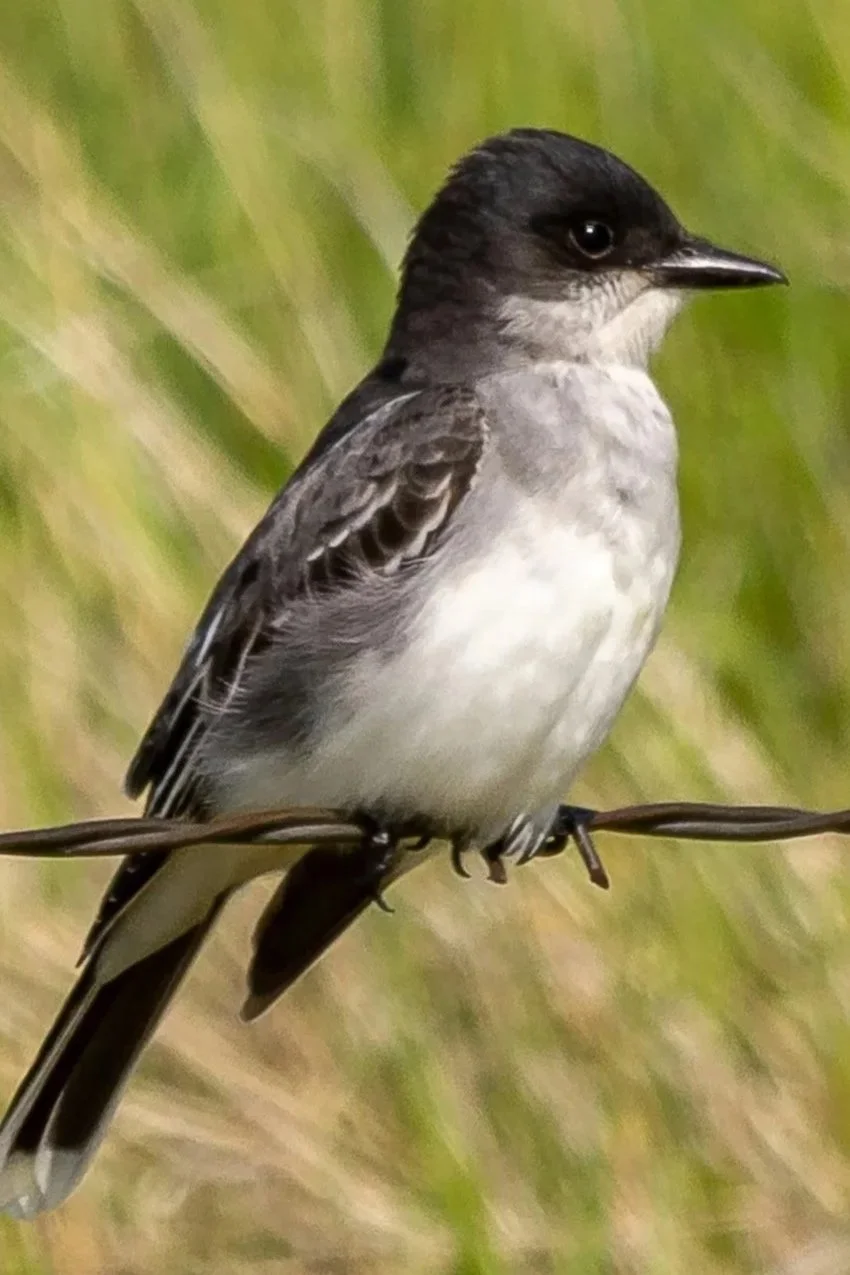
EASTERN KINGBIRD
(Tyrannus tyrannus)
Bold and striking in black and white, with a hidden red crown patch. Found across most of North America in summer, these confident birds aggressively defend their nests and often perch in open fields and along fence lines before migrating to South America.
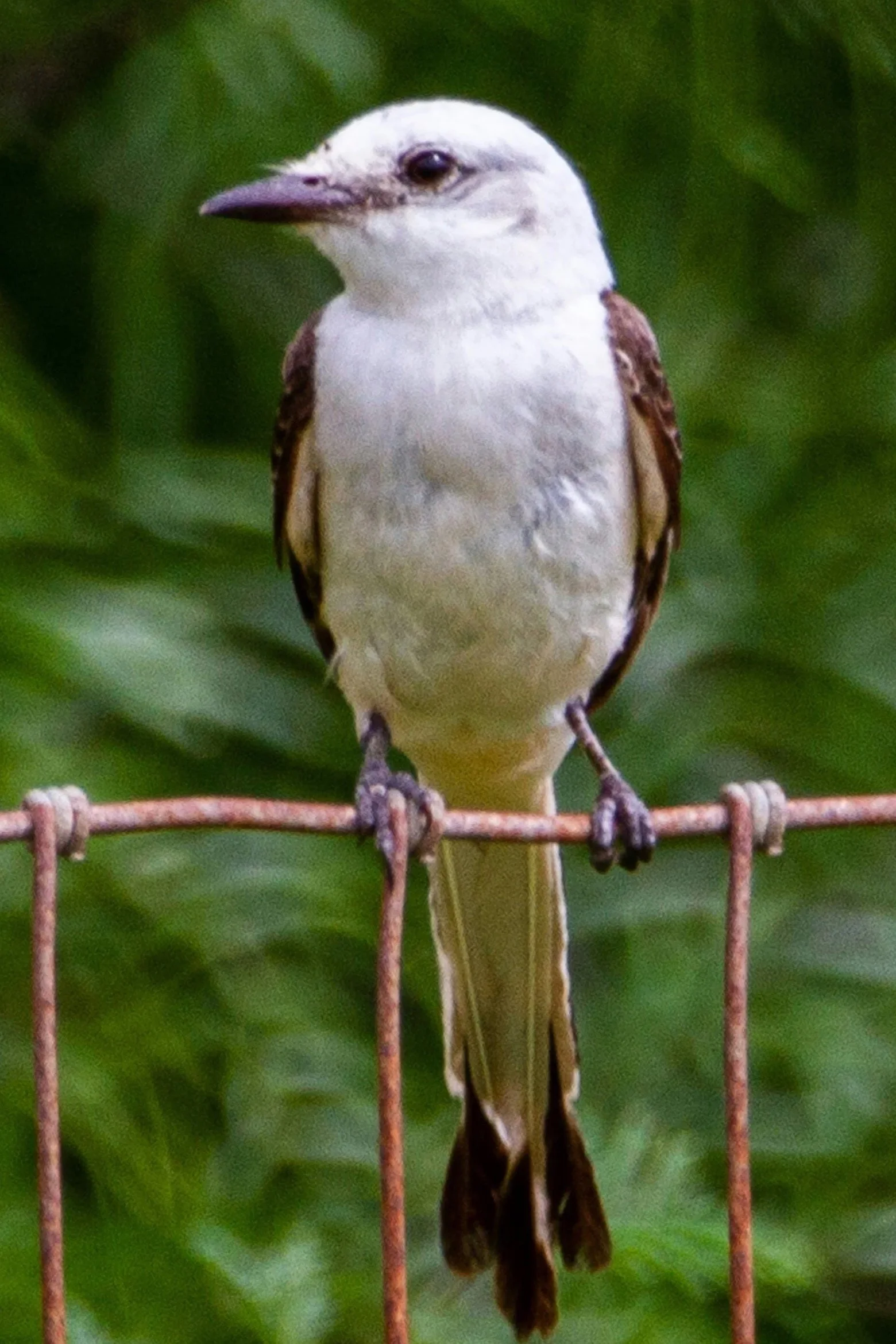
SCISSOR-TAILED FLYCATCHER
(Tyrannus forficatus)
Elegant and unmistakable with its long, forked tail and soft pink sides. Native primarily to the south-central United States, especially Texas and Oklahoma, it favors open grasslands and ranch country before wintering in Mexico and Central America.
Larger and colorful compared to many flycatchers, with warm yellow underparts and rusty wings. Found in the eastern and central United States during breeding season, it prefers wooded areas and migrates to Central and South America.
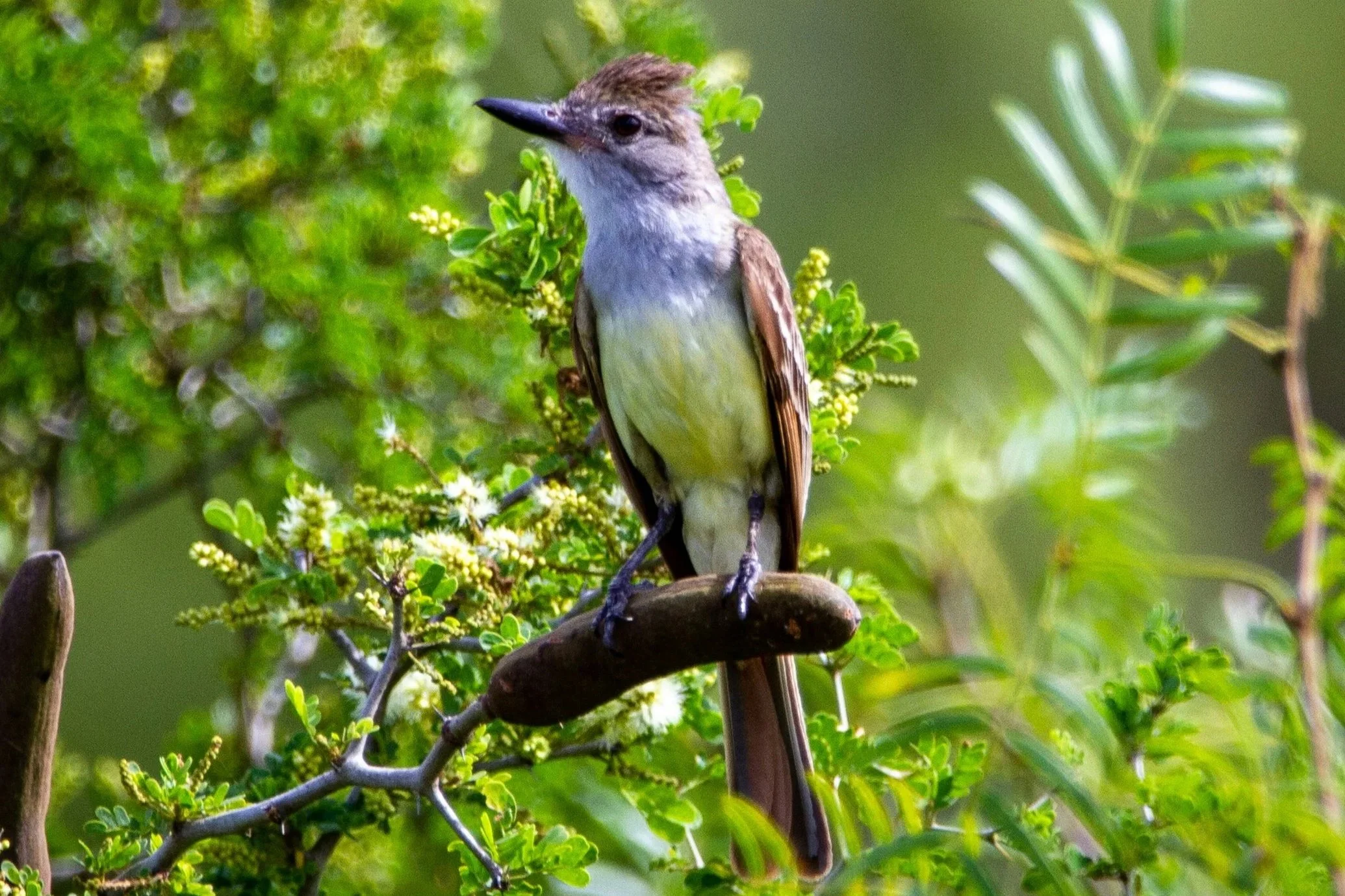
GREAT CRESTED FLYCATCHER
(Myiarchus crinitus)
Gentle and familiar, with a soft gray-brown body and constant tail wag. Native to the eastern U.S., phoebes often nest under porches and bridges and migrate to the southeastern U.S. and Mexico for winter.
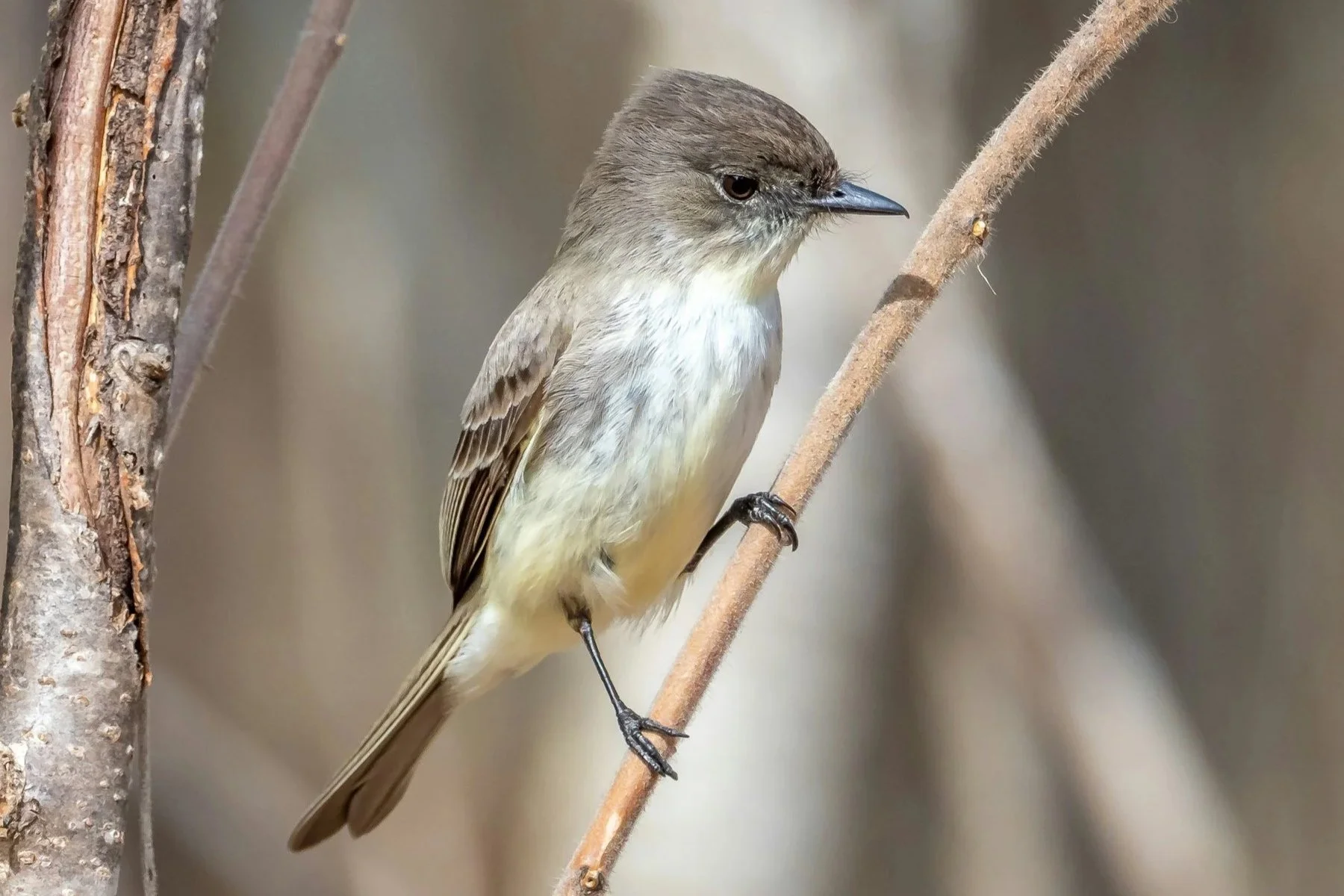
EASTERN PHOEBE
(Sayornis phoebe)

FACT OR FICTION?
-
FICTION. While many snatch insects in flight, they also grab prey from leaves, branches, and even the ground.
-
FACT. Kingbirds will boldly chase away hawks, crows, and other much larger birds that venture too close to their nests.
-
FICTION. Though some species are similar, subtle differences in color, size, call, and habitat help distinguish them.
-
FACT. Many species use a “sit-and-wait” strategy, launching from and returning to a favorite lookout spot.
-
FICTION. Their quick bursts of speed and sharp turns make them highly skilled aerial hunters.
WHY FLYCATCHERS MATTER.
Flycatchers play an important role in controlling insect populations, helping maintain balance in forests, farms, and gardens. By feeding heavily on flies, beetles, wasps, and other insects, they naturally reduce pest numbers.
Their presence also signals healthy habitat — especially areas with clean water, open space, and abundant insect life. Watching a flycatcher dart out and return to its perch is a reminder of nature’s precision and quiet efficiency.